
 English
  Français
  Español
  Português
  العربية
  Русский
  Bahasa Indonesia
  中文
中文 Used Tractor Truck Buying Guide: How to Pick the Right Prime Mover
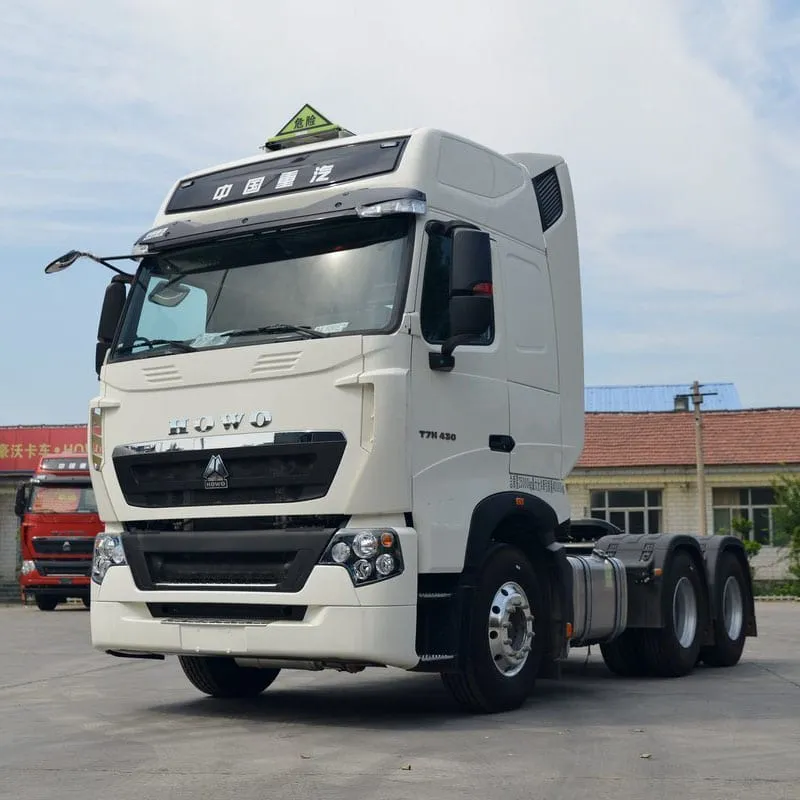
Buying the wrong prime mover is an expensive mistake that shows up every time the truck climbs a grade or fails to pull a fully loaded trailer. This used tractor truck buying guide walks through how to match a unit to the actual job, what to inspect on the fifth wheel and driveline, and how HOWO and SHACMAN tractors compare for export duty to Africa and the Middle East.
Define the Job Before You Look at Trucks
A tractor unit is only as good as its match to the work. Before browsing used tractor trucks, write down three numbers: the gross combination weight you intend to run, the type of trailer you will couple, and the worst terrain on your route. A 40-tonne fuel tanker on flat coastal roads is a very different machine from a 60-tonne low-bed crawling over mountain passes.
Operators routinely overload in real-world haulage, so size the truck for what it will actually carry, not the brochure figure. If the trailer is a tipping bulk trailer for aggregate, the prime mover needs strong low-end torque and a robust rear axle. For long-distance container or curtain-side work, fuel economy and cab comfort matter more. Get the job defined and the rest of the choices fall into place.
4x2 or 6x4: Choosing the Drive Configuration
The drive configuration is the first hard decision. A 4x2 tractor — one driven rear axle — is lighter, cheaper to buy and run, and fine for moderate loads on good roads. It is common for regional distribution and lighter container work where traction is not a problem.
For heavy haulage, rough ground or any route with poor surfaces and steep grades, a 6x4 tractor with two driven rear axles is the sensible choice. The extra driven axle spreads the load, improves traction on loose or wet surfaces, and carries far more weight legally and safely. Most African and Middle Eastern heavy-duty operators run 6x4 prime movers for exactly this reason. If you are unsure, a 6x4 is the safer default for export duty — it copes with overload and bad roads that would defeat a 4x2.
Engine Power and Torque for the Load
Power has to match the load, the trailer and the gradient. For most heavy combinations a 371hp engine is the proven sweet spot, and the howo 371 is one of the most widely sold prime mover engines across the continent precisely because parts and mechanics are everywhere. Lighter regional work can run on 336hp; very heavy or mountainous routes justify 420hp or more.
Torque matters as much as headline horsepower. Pulling away fully loaded on a grade is a torque job, and an engine that is short on it will slip the clutch and overheat. Listen for that when you test drive: a properly specified used heavy duty trucks tractor should pull cleanly from low revs without excessive clutch slip or black smoke.
Fifth Wheel and Coupling Inspection
The fifth wheel is the single point that holds the trailer to the truck, so inspect it before anything else. Check the coupling plate for deep grooves, cracks and excessive wear on the locking jaws. Couple and uncouple a kingpin if you can — the jaws should close firmly with minimal play. A worn fifth wheel allows the trailer to rock and snake, which is dangerous at speed and chews tyres.
Look at the mounting and the slider, if fitted, for cracks and loose bolts. Check the kingpin height matches your trailers. Grease residue is normal and good; a dry, scored plate that has run without lubrication is a warning sign. Replacing a fifth wheel is not catastrophic, but it is a cost you should price in before you agree on a figure.
Clutch, Gearbox, Frame, Brakes and Tyres
Drive the truck. A heavy or grabbing clutch, slipping under load, or a high biting point all point to a worn clutch. Run through every gear cold and warm — synchros that crunch, a gearbox that jumps out of gear, or whining bearings are expensive. Check for oil weeping from the bell housing and rear of the gearbox.
Inspect the frame and cross-members for cracks, rust-through and amateur welds, especially around the fifth wheel mount and the suspension hangers where stress concentrates. The air-brake system should build pressure promptly, hold without leaking down, and the chambers and slack adjusters should be intact. On tyres, 12R22.5 is the standard size; check tread depth, sidewall cracking and uneven wear that hints at axle or alignment problems. For a fuller method, see our guide on how to inspect a used Chinese truck.
HOWO and SHACMAN Tractor Options, and Buying CIF
Two brands dominate the export market. The howo truck range is the most common prime mover across Africa, backed by the WD615/Weichai engine family and the widest parts network — the practical choice when uptime depends on local repairs. The shacman truck uses a MAN-derived cab and Weichai power, and many drivers rate it for heavy pulling and cab comfort. Both are sold as reliable 6x4 prime movers; the right one depends on local parts support and driver familiarity. Our comparison of HOWO versus SHACMAN goes deeper on the trade-offs.
For export, buy CIF (cost, insurance and freight) from a vetted china used truck exporter so inspection, marine insurance and shipping to your port are all handled in one price. That removes the freight-forwarding headache and gives you a single accountable party if anything is wrong on arrival. You can see current stock among our used trucks for sale, where many tractor trucks for sale are listed with inspection records.
Frequently Asked Questions
Is a 4x2 or 6x4 tractor better for African roads?
How much engine power does a used tractor truck need?
What is the most important thing to inspect on a used prime mover?
What does buying a tractor truck CIF mean?
Tell us your load, trailer and route, and we will spec a 6x4 prime mover and quote it CIF to your port.
Reply within 24 hours — or WhatsApp us at +86 199 6378 9330.