
 English
  Français
  Español
  Português
  العربية
  Русский
  Bahasa Indonesia
  中文
中文 Used Boom Trucks & Crane Trucks for Sale — Chinese Chassis, Export Ready
A boom truck earns its keep every day — lifting structural steel at a construction site, setting utility poles along a rural corridor, or loading containers in a logistics yard. Sigma sources, inspects, and exports used crane trucks on proven Chinese chassis (HOWO, SHACMAN, DONGFENG) to buyers across Africa and the Middle East. Whether you need a compact knuckle-boom lorry crane for tight urban sites or a heavy telescopic crane truck rated above 15 tonnes, we build each order around your lift requirements, road regulations, and port-of-entry rules — then convert to LHD or RHD before shipment.
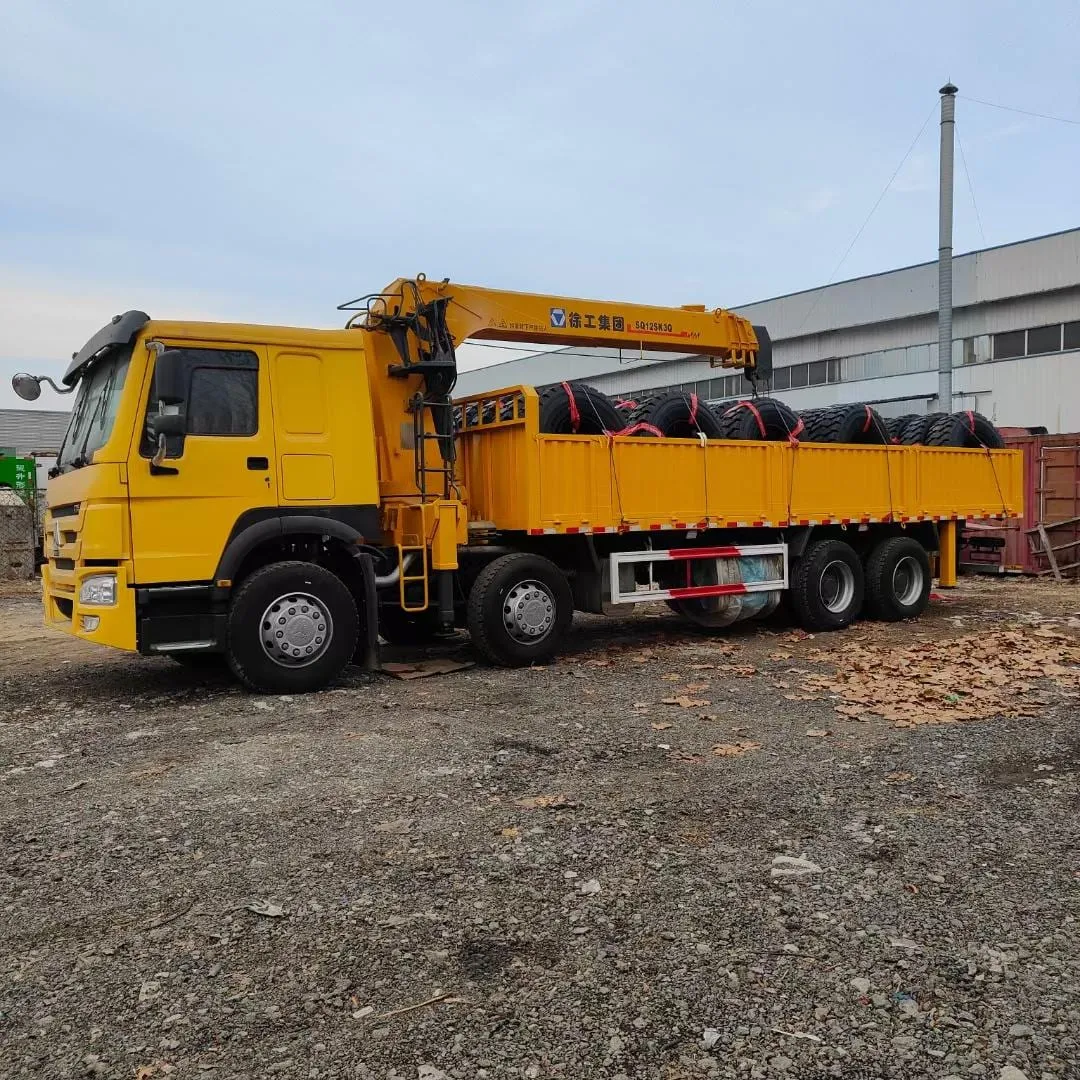
Four Types of Truck-Mounted Crane — Which One Fits Your Job?
Not every crane truck is built for the same lifting profile. Across Africa, the Middle East, and the Commonwealth, operators refer to these vehicles as truck-mounted cranes, lorry-mounted cranes, boom trucks, or HIAB trucks — but the structural configuration of the boom and carrier chassis determines what the machine can safely lift and haul. Understanding the four primary configurations prevents over-paying for unused lifting moment or under-specifying for your working radius:
- Telescopic boom truck (straight boom): Sections slide out hydraulically to extend reach, typically 8–22 m. High lift height, fast cycle times, simple to operate. Best for construction materials, precast concrete, and telecom tower work. Common ratings: 5 t, 8 t, 10 t, 12 t, 16 t.
- Knuckle-boom crane / lorry loader (articulating boom, widely called a hiab across Africa and the Commonwealth): Two or more boom segments fold like a finger joint. The crane folds flat behind the cab when not in use, leaving the full bed free for cargo. Ideal for self-loading delivery trucks, timber yards, steel service centres, and any job where the truck also carries the load. Ratings from 3 t·m up to 100 t·m moment.
- Self-loading crane truck (loader crane + tipper): Combines a rear-mounted knuckle boom with a tipping body. One driver loads, hauls, and offloads without ground crew. Popular for sand/aggregate yards and small construction contractors in East and West Africa.
- Full truck crane (on dedicated carrier): Purpose-built crane carrier — outrigger spread, 360° slew, high boom angles. Heavier units from XCMG, Zoomlion, and Sany in the 25 t and above class. These are specialist machines; lead times and inspection depth increase accordingly.
If you are comparing a truck mounted crane against a mobile crane or a pick-and-carry crane, the truck-mounted option usually wins on total cost when the machine must also travel public roads between sites daily.
Lifting Capacity & Boom Reach: A Practical Reference
When evaluating a used crane truck for sale, the headline tonnage rating only states the maximum lift at minimum working radius (typically 2.0–2.5 metres from the slew centreline). Actual site performance depends on the load chart at your required horizontal reach and boom extension. Use this table as an engineering reference and always verify the manufacturer's load chart before purchase:
| Class | Typical Gross Lift | Max Boom Reach | Common Application | Chassis Example |
|---|---|---|---|---|
| Light lorry crane | 3–5 t | 8–12 m | Building materials delivery, small utilities | DONGFENG 4×2 |
| Medium boom truck | 6–10 t | 12–18 m | Construction, precast, telecoms | HOWO 4×2 / 6×2 |
| Heavy telescopic | 12–16 t | 16–22 m | Steel erection, bridge segment, heavy logistics | HOWO 6×4 / SHACMAN 6×4 |
| Specialist truck crane | 20–25 t+ | 30 m+ | Industrial plant, port, infrastructure project | XCMG / Zoomlion dedicated carrier |
Remember: a boom truck for sale listing almost always quotes maximum single-line capacity at minimum radius. Ask for the full rated capacity chart at 3 m, 6 m, 10 m, and maximum radius before you commit. This matters most at the light end of the range, where a genuine lift boom truck can carry noticeably more than the listing name suggests.
Chinese Crane Truck Brands: What You Are Actually Buying
China produces the world's largest volume of truck-mounted cranes and truck cranes. The main names you will encounter in the used market:
- XCMG: Xuzhou Construction Machinery Group — one of the largest crane OEMs in China by volume. Truck cranes (QY series) are export staples across Africa and the Gulf. Parts supply chain is among the most developed of any Chinese brand outside China.
- Zoomlion: Competitive with XCMG on full truck cranes; growing used-market presence in Nigeria, Ghana, and Kenya.
- Sany: Known for rough-terrain and all-terrain cranes; truck-mounted units in the 25–50 t range increasingly seen in East African infrastructure projects.
- HOWO / SHACMAN chassis with third-party crane: The most common configuration for 5–16 t telescopic crane trucks and knuckle-boom lorry loaders. The truck body is a standard HOWO or SHACMAN (proven, parts available in almost every African capital), and the crane superstructure (often XCMG, Sany Palfinger, or HIAB-pattern) is mounted on a reinforced auxiliary subframe.
Within that range, a 30 ton crane truck sits at the lighter end of Sany's truck-mounted line, while a 50t crane sits at the top — both sourced to order rather than held as standing stock.
For buyers who already run a HOWO fleet — common across South Africa, Kenya, Uganda, and Tanzania — a used boom truck on the same chassis simplifies driver training, servicing, and spare parts procurement. A knuckle boom crane truck built on that same chassis simplifies things further for delivery fleets that also carry cargo. We prioritise HOWO and SHACMAN platforms for exactly this reason. You can browse the broader HOWO lineup on our HOWO truck pages.
What to Inspect on a Used Crane Truck Before You Buy
A used crane truck carries two inspection layers: the truck chassis and the crane superstructure. Our team checks both. Here is what matters, in plain terms:
Crane Superstructure
- Boom sections and welds: A crane truck boom takes the most wear on this machine — look for cracks at pin holes, bent sections, and weld repairs. On telescopic booms, check slide pads and chrome cylinder rods for scoring.
- Hydraulic cylinders and hoses: Any weeping at seals on the boom lift cylinder or extension cylinders means immediate replacement cost. Budget for hose renewal on any unit over eight years old.
- Slew ring (slewing bearing): Grab the boom base and check for play. A worn slew ring is expensive to replace and affects load safety. This check alone disqualifies many otherwise tidy units.
- Outriggers and pads: Extend all four outriggers fully. Check for bent arms, leaking cylinders, and missing or cracked pads. On rough African ground, outriggers take abuse.
- Winch and hook block: Run the winch under load. Check rope/wire condition, hook swivel freedom, and safety latch.
- Load chart plate: Must be present, legible, and match the crane serial number. Missing or defaced charts are a red flag for units that have been over-loaded.
- Safety devices: Verify the rated capacity limiter (RCL/LMI) or mechanical overload protection is functional. Many importing countries now require this for port clearance.
Truck Chassis
- Frame straightness (especially behind the cab where the crane subframe bolts)
- PTO (power take-off) engagement — the crane's hydraulic pump runs from here
- Transmission and axle condition, tyre wear pattern
- Cooling system adequacy — crane operation adds heat load in hot climates
We document findings with photos and share the inspection report before you commit to payment. No guesswork on a machine that lifts over people's heads.
How We Source, Inspect & Ship Your Crane Truck
Sigma does not keep a fixed warehouse of crane trucks — this is a specialist, sourced-to-order line. Here is how the process works:
- Requirement brief: Tell us your lift capacity, boom reach, application, chassis preference, and destination country. If you already know you want a truck with hiab crane fitted, tell us that too — it narrows the shortlist fast. If you are unsure, describe the job — for example, setting 9-metre utility poles on laterite roads in Uganda is more useful than just a tonne rating.
- Sourcing: We locate matching units from our supplier network across China. We shortlist two to four candidates and send you photos, mileage, year, and crane brand before any commitment.
- Inspection: Our technicians carry out the full chassis and crane superstructure inspection described above. Critical defects are repaired or the unit is rejected.
- Conversion: LHD/RHD conversion in-house if required. Steering, instrument cluster, and lighting adapted to destination-country standards.
- CIF shipment: We handle port loading, marine insurance, and freight to your destination port — Mombasa, Dar es Salaam, Tema, Apapa, Durban, Jebel Ali, Umm Qasr, and others. We have shipped to more than 40 countries.
Every lorry mounted crane for sale we quote has already been through this sourcing and inspection process — nothing is listed sight-unseen. Lead time from confirmed order to loading is typically four to ten weeks depending on unit availability and conversion scope. We do not quote faster than we can deliver. If you also need general haulage capacity alongside your crane unit, our used trucks for sale inventory covers a wide range of chassis and configurations.
Choosing a Crane Truck for Africa & the Middle East: Practical Notes
Operating a lorry crane — what many buyers simply call a mobile truck crane — in Nairobi, Lagos, Accra, or Baghdad is different from operating one in Europe. A few notes from experience:
- Dust and heat: Hydraulic oil degrades faster in high-ambient temperatures. Specify a cooler-capacity crane unit and budget for oil and filter changes at shorter intervals. HOWO and SHACMAN cooling systems are well-proven in sub-Saharan conditions.
- Road conditions: Outrigger pad size matters on unpaved ground. Larger pads, or supplementary timber mats, prevent sinkage on laterite or sand. Check that the outrigger spread on your chosen unit matches the ground-bearing capacity typical on your sites.
- Parts supply: XCMG crane parts are available through regional dealers in South Africa, Kenya, Nigeria, and the UAE. HOWO chassis parts are widely available in almost every African capital — a key advantage over European-brand alternatives.
- Import duties and axle limits: Nigeria, Ghana, and Tanzania all apply strict axle-load limits. A 6×4 crane truck configured for 25-tonne gross in China may need derating or a special permit locally. We advise on this during the order brief.
- Operator certification: Gulf states (UAE, Iraq, Qatar) require crane operator certification and periodic third-party inspection of lifting equipment. Factor this into your total cost of ownership when comparing crane truck price across suppliers — a low boom truck price advertised online rarely includes inspection or conversion costs.
Buyers in South Africa sourcing cranes alongside general haulage units often start at our trucks for sale in south africa page to benchmark the broader fleet before specifying the crane unit separately.
Crane Truck vs. Mobile Crane: When the Truck-Mounted Option Wins
A common buyer question — especially from someone who just wants a lorry with a crane — is whether to buy a truck crane or a separate mobile crane plus a cargo truck. The answer depends on utilisation.
- Buy a truck-mounted crane when: The machine must travel public roads daily between job sites; you need one driver to handle transport and lift; your lifts are consistent in weight and radius; budget is limited and you cannot justify two depreciating assets.
- Buy a separate mobile crane when: You have a fixed heavy-lift application (port, plant shutdown); lifts regularly exceed 25 tonnes or require complex rigging; the crane will stay on-site for weeks at a time while trucks continue hauling elsewhere.
For most small and mid-size contractors in East and West Africa, and for utilities companies across the Middle East, the boom truck wins on total cost. One machine, one driver, one insurance policy, one maintenance schedule. The cargo bed — on a truck with knuckle boom fitted — still carries payload on the return trip.
For buyers whose core need is bulk haulage with occasional lift capability, a self-loading crane truck on a tipper chassis is often the lowest-cost entry point into the crane truck category. For heavier haulage without the crane, see our semitrailer trucks or general lorries price pages.
Used Crane Trucks by Type
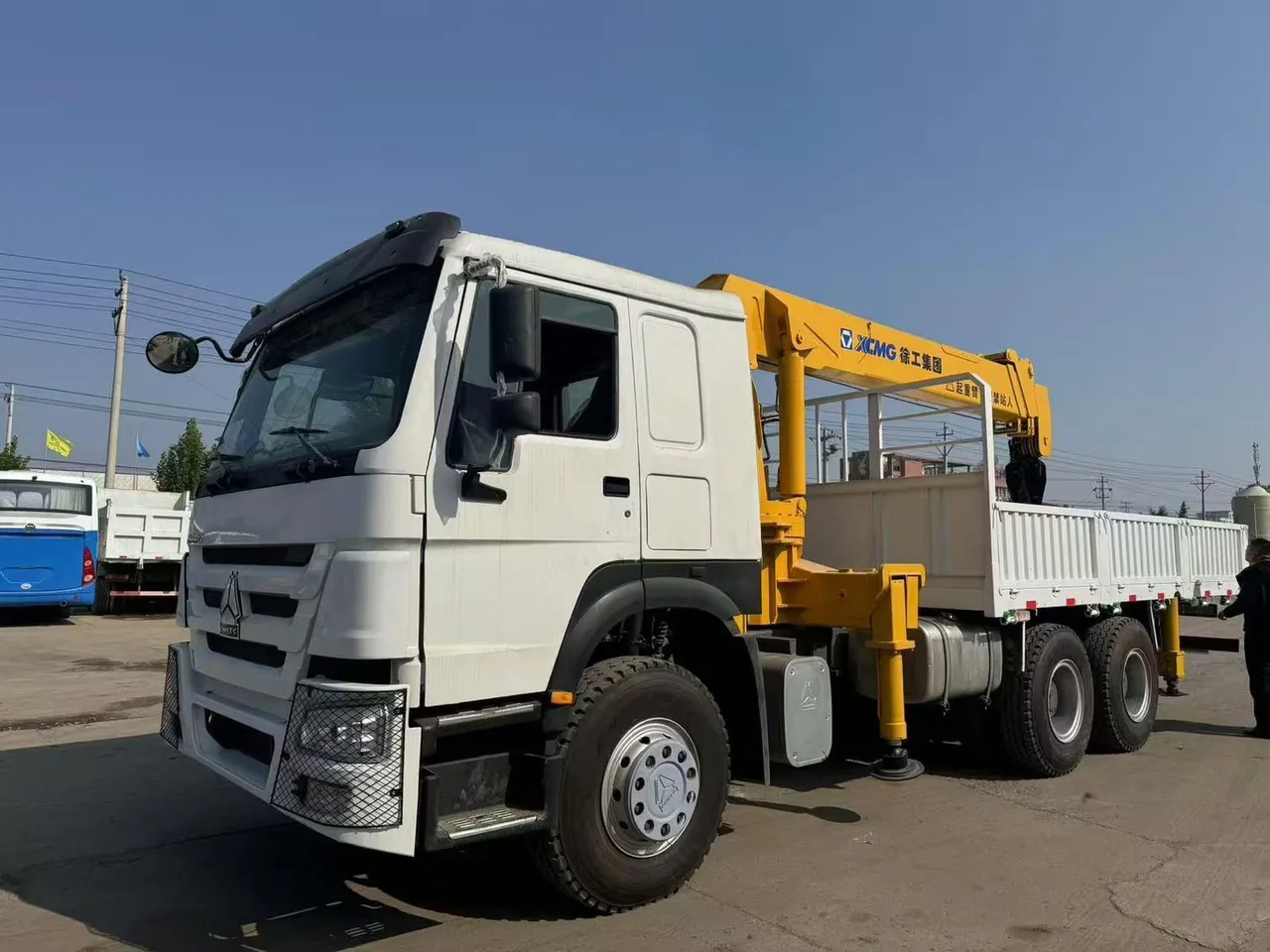
Telescopic Boom Truck — 8–12 t
Straight telescopic boom on HOWO or SHACMAN 6×4 chassis. Rated 8–12 tonnes at minimum radius, boom reach to 18 m. Suits construction materials lifting, precast erection, and telecom tower work. Inspected hydraulics and slew bearing; LHD/RHD available.
View Details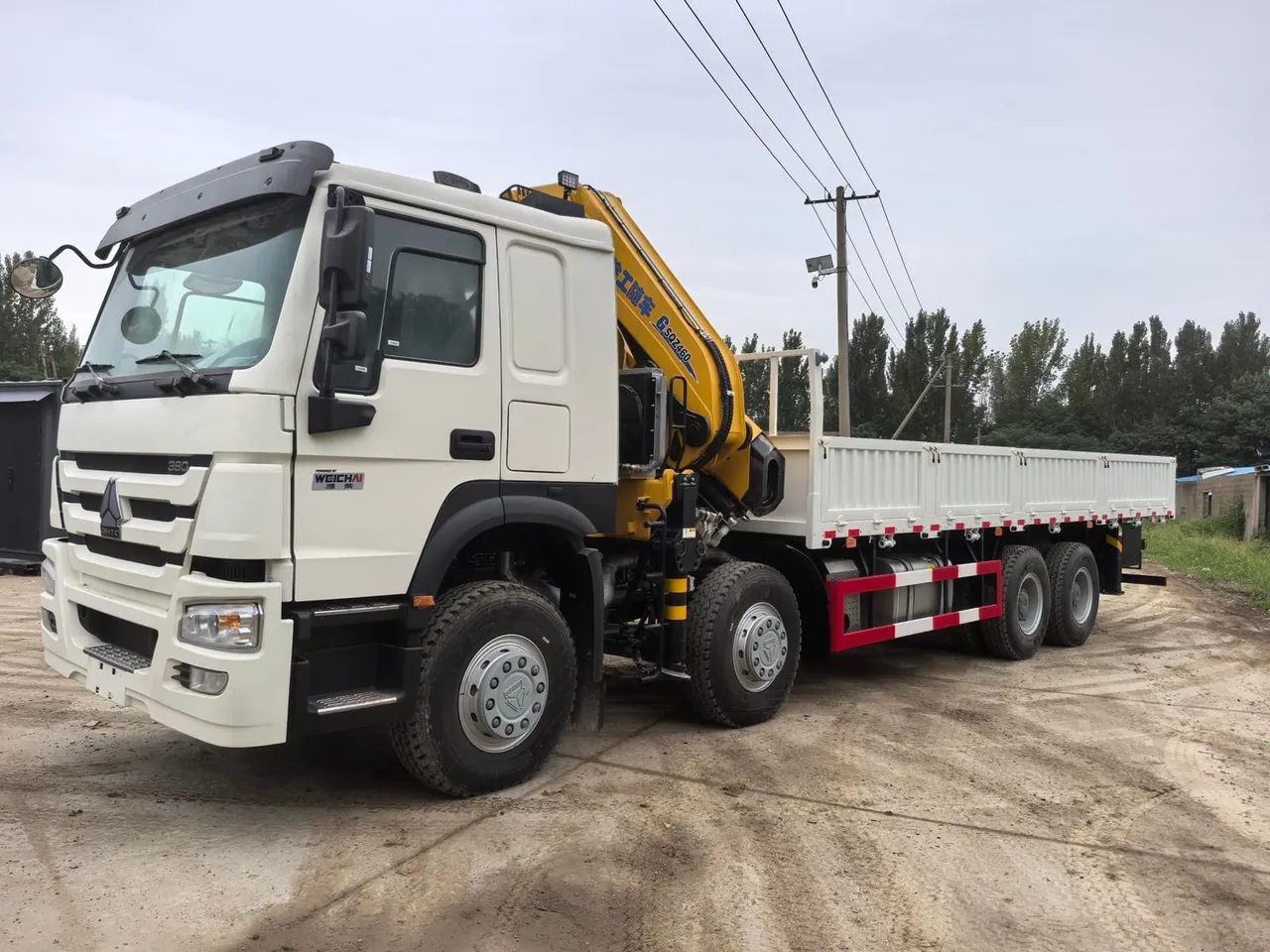
Knuckle-Boom Lorry Crane — 3–8 t·m
Articulating knuckle-boom crane mounted behind cab on DONGFENG or HOWO 4×2. Folds flat for road travel; full bed available for cargo. Ideal for building materials delivery, timber yards, and steel stockholders. Self-loading capability reduces ground crew.
View Details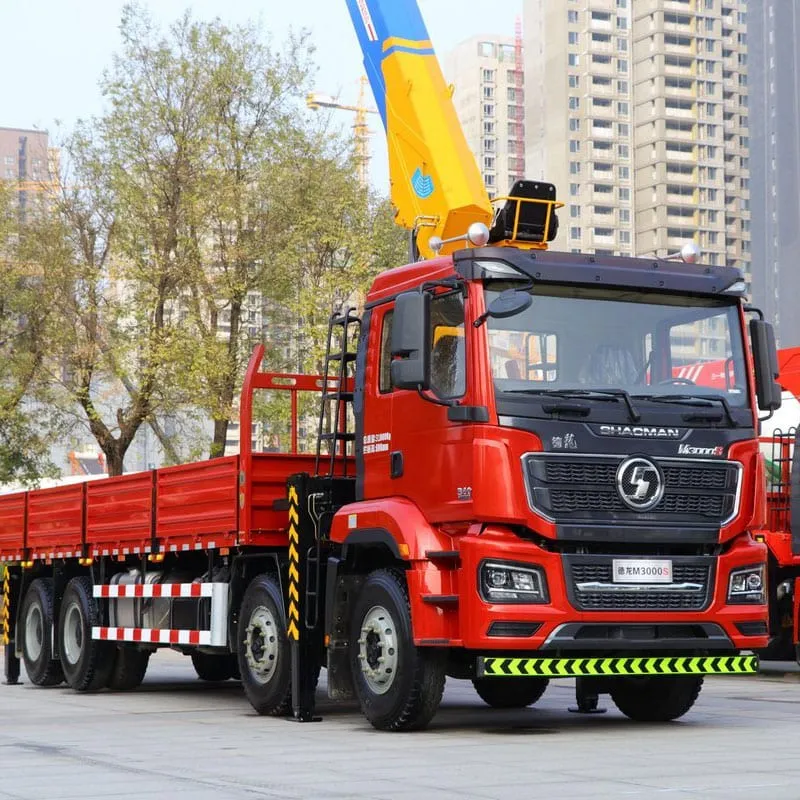
Self-Loading Crane Tipper — 5–8 t
Rear-mounted knuckle boom combined with hydraulic tipping body. One operator loads, hauls, and tips without ground support. Common in aggregate yards and small construction fleets across Kenya, Uganda, Ghana, and Nigeria.
View Details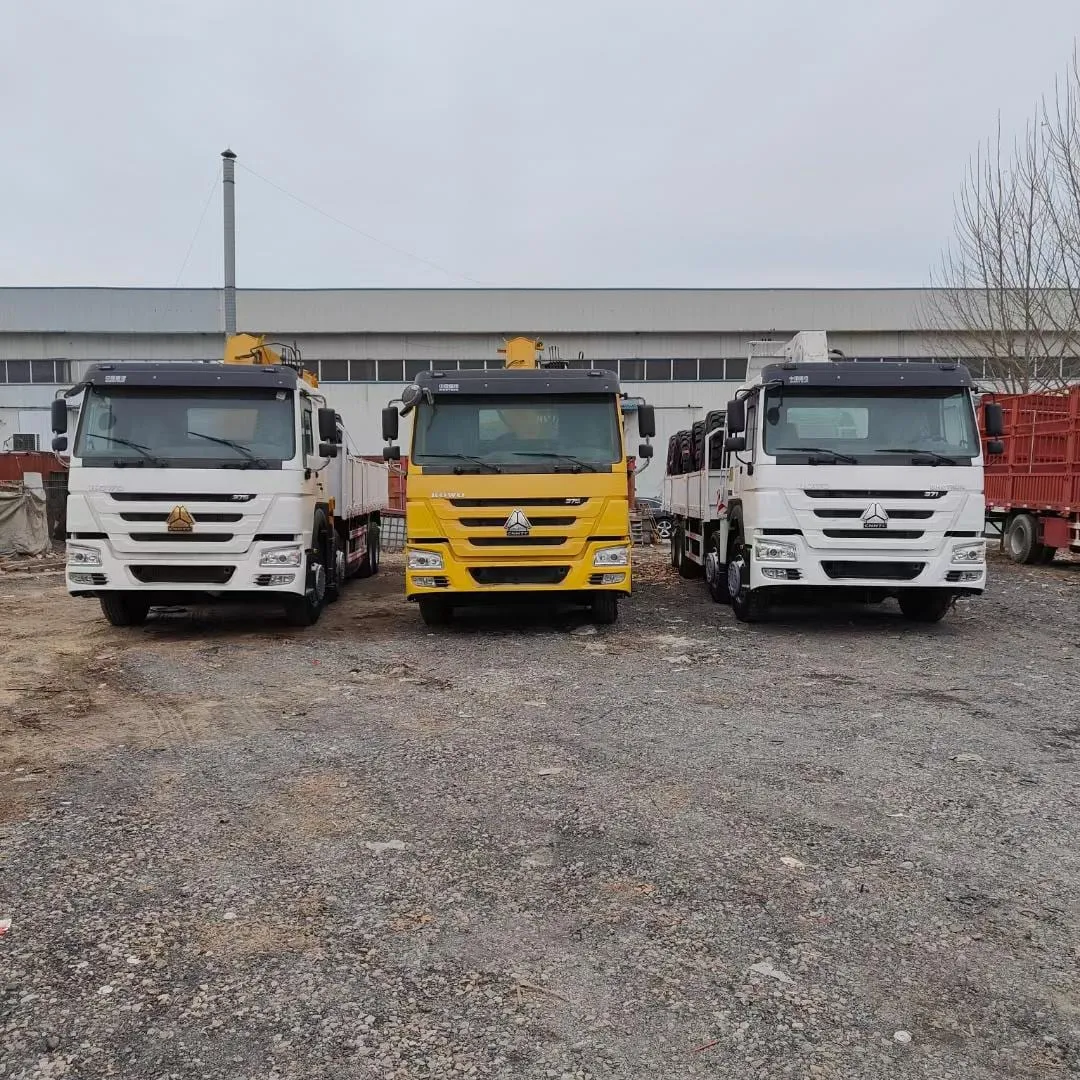
Heavy Telescopic Crane Truck — 12–16 t
High-capacity telescopic boom on heavy HOWO or SHACMAN 6×4. Rated 12–16 t, boom to 22 m. Inspected outriggers, load chart plate present. Suited to steel erection, bridge work, and industrial plant maintenance. CIF to major African and Gulf ports.
View Details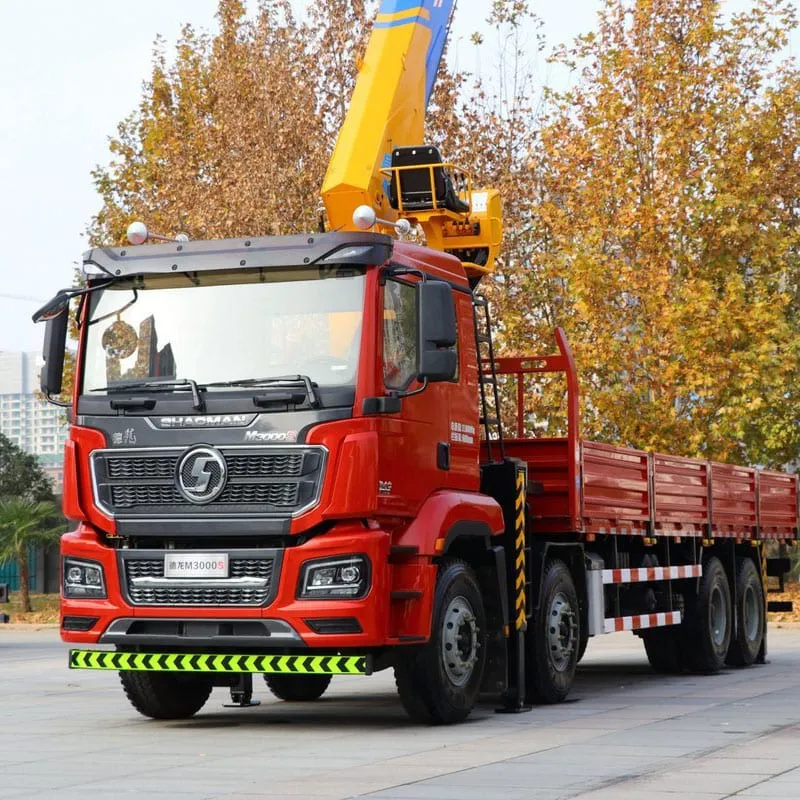
XCMG Truck Crane — 20–25 t
Sourced-to-order XCMG QY-series truck crane in the 20–25 t class. Full 360° slew, multiple outrigger positions, load moment indicator. Parts available through XCMG regional dealers in South Africa, Kenya, Nigeria, and UAE. Inspection report shared before payment.
View Details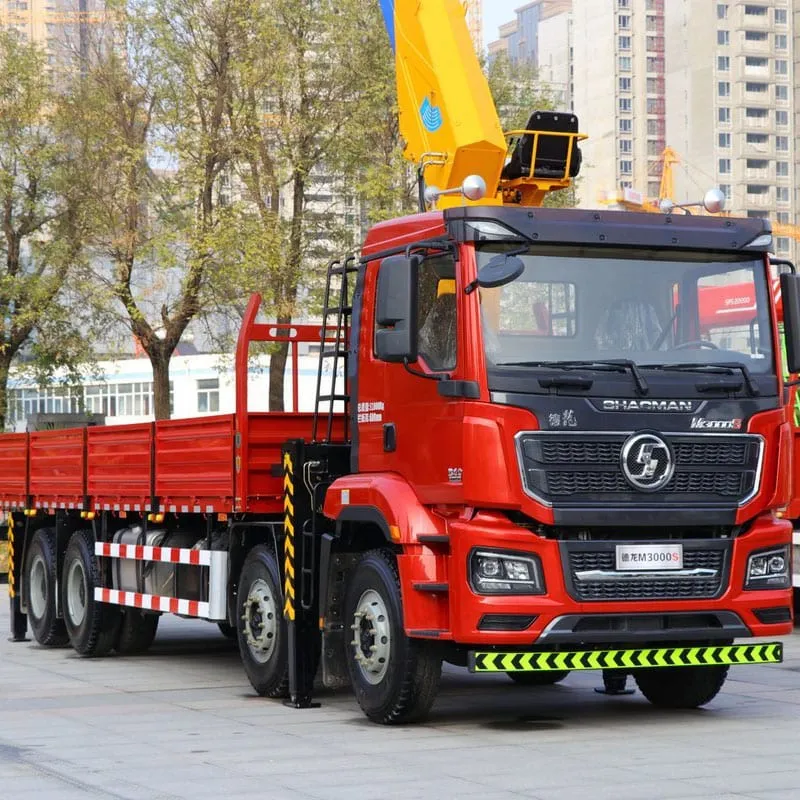
Medium Boom Truck — 5–8 t (Urban Utility)
Compact 5–8 t telescopic boom on 4×2 chassis. Shorter wheelbase for urban sites and tight access roads. Used widely by utilities companies for pole-setting and overhead cable work in Nigeria, Ghana, and Tanzania. LHD/RHD conversion available.
View DetailsReal Photos — Inspected, Export-Ready Units
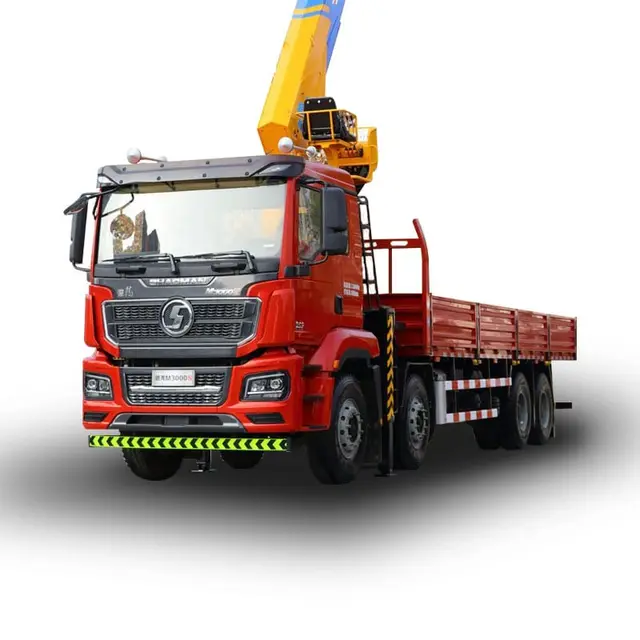
Actual stock and reference units we ship CIF to Africa & the Middle East. Every truck is mechanically inspected and refurbished before loading.
Frequently Asked Questions
What is the difference between a boom truck and a truck crane?
What lifting capacities do your used crane trucks cover?
Can you supply a right-hand drive crane truck for South Africa, Kenya, or Uganda?
How do I know the crane has not been overloaded or structurally damaged?
What is the typical lead time for a sourced-to-order crane truck?
Do you ship CIF to Gulf ports such as Jebel Ali and Umm Qasr?
Do you sell an Isuzu boom truck?
Which is better for my fleet: a knuckle-boom lorry crane or a telescopic boom truck?
Is a truck mobile crane the same as a boom truck?
Tell us your lift capacity, working radius, destination port, and chassis preference — we source, inspect, convert, and ship to your door.
Reply within 24 hours — or WhatsApp us at +86 199 6378 9330.